
Permanent Access Design for a Tidal River Environment
Published: 03/11/2026 13:29
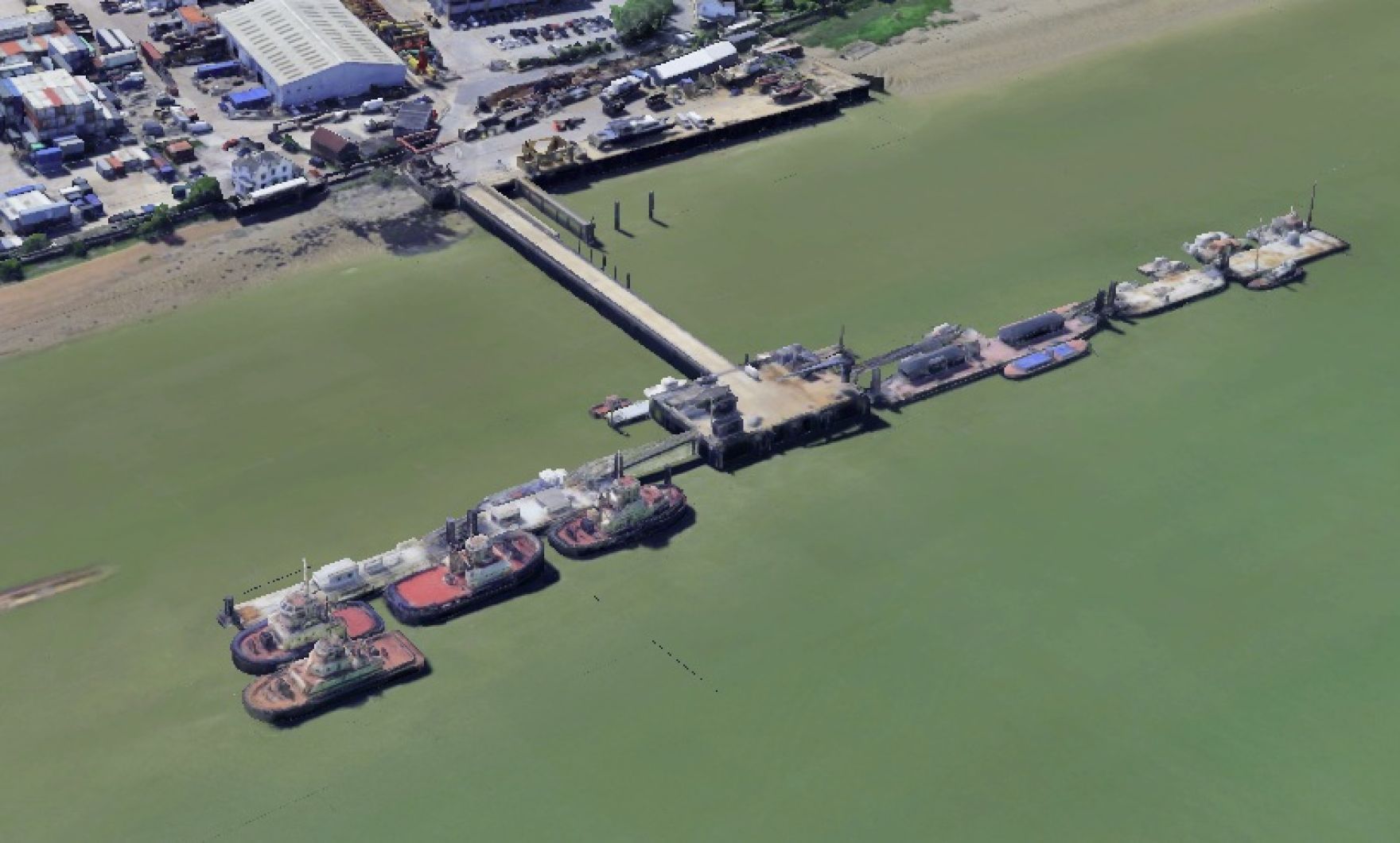
Richter supported 3RS Engineering with the design of a new access structure onto a pontoon at Denton Wharf on the River Thames at Gravesend. This was required as part of refurbishment works being undertaken by the Port of London Authority.
The structure comprised a bespoke access walkway (or brow) supported by platforms at either end. One platform was connected to the adjacent jetty and the other founded on the pontoon. Richter was responsible for designing both platforms and their connections to the existing structures and brow.
Owing to the location of the wharf, several unique challenges had to be overcome.
Introducing the new brow and platforms onto the pontoon changed the magnitude and position of the loads applied to it. Richter therefore reassessed the stability of the pontoon under the revised loads, together with the existing environmental loads, and adjusted the ballast requirements to maintain a level position and sufficient freeboard above the waterline.
The River Thames has a significant tidal range at this location. As the water level rises and falls, the pontoon moves vertically while the brow remains a fixed length. The access platforms therefore needed sufficient articulation to accommodate this movement while continuing to provide a safe connection between the fixed jetty and floating pontoon. Richter developed an arrangement with a fixed pivot at the upper platform and a roller connection at the lower platform to accommodate the tidal movement.
At the peak of a high spring tide, the brow could potentially clash with the edge of the lower platform and restrict its movement. Richter addressed this by incorporating a chamfered platform edge, providing the clearance required for the brow to move freely throughout its design range.
A pinned ramp at the lower end of the brow maintained a usable transition onto the platform as its angle changed, whilst chains were incorporated across the corresponding gap in the handrail to maintain safe access throughout the movement range.
The structure had a 50-year design life. Richter therefore made allowances for future changes in water levels, ensuring the structure could continue to operate across a wider range of river levels.
The marine environment introduced durability and environmental challenges. The steelwork was designed to account for long-term corrosion and section loss, along with fatigue and thermal movement. Coatings and lubricants were specified to minimise the risk of contamination entering the watercourse, while the access surfaces were designed to provide slip resistance and drainage in wet conditions.
Existing services along the quayside were also considered in the design, with sufficient clearance maintained to enable their diversion as part of the wider works.
Richter undertook the role of Principal Designer under the Construction (Design and Management) Regulations 2015 (CDM 2015), challenging designs undertaken by all members of the project team and compiling the health and safety file on completion of the project.


