
How Matt Hall Is Shaping the Future of Temporary Works at Richter
Published: 11/12/2025 07:30
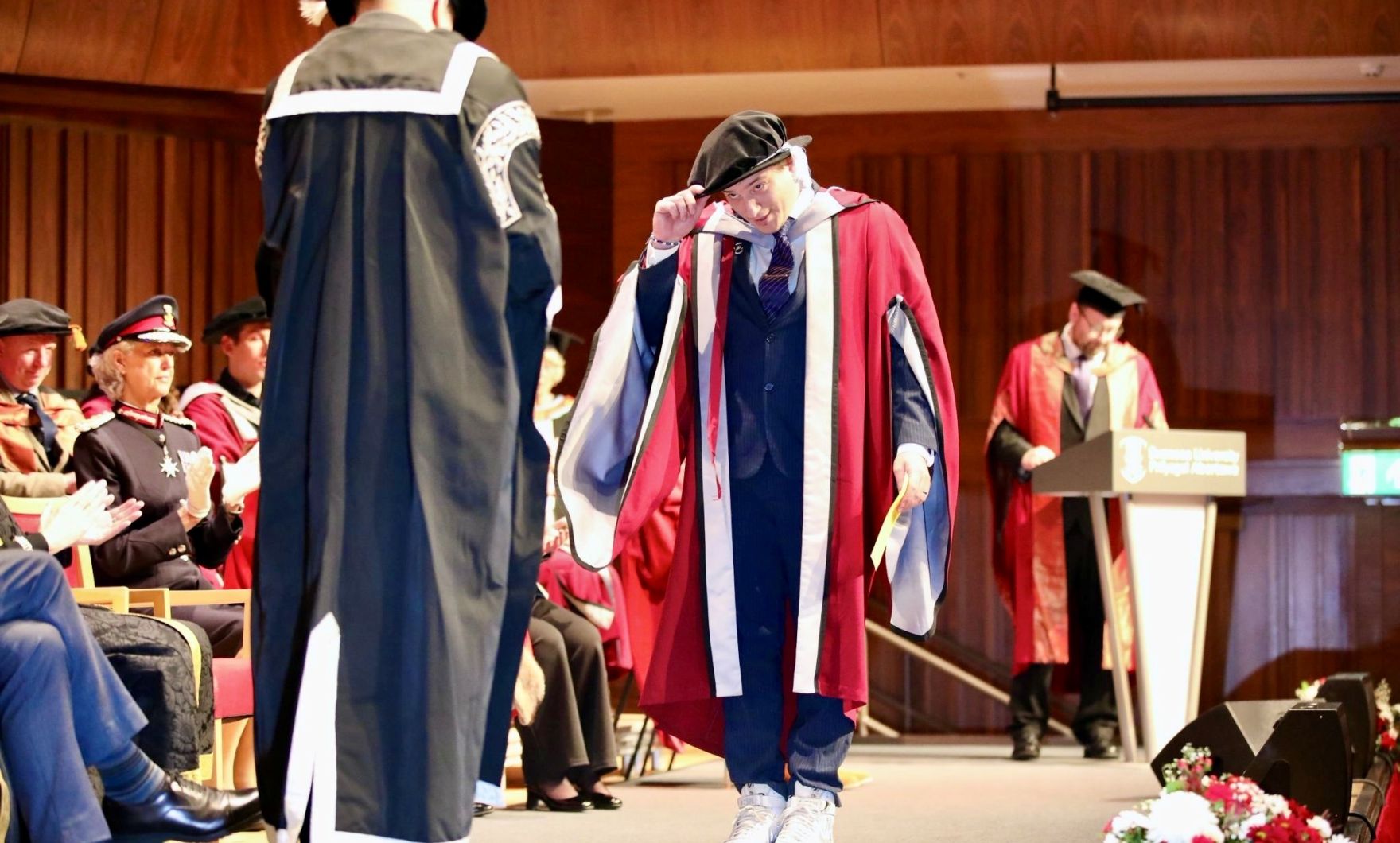
Matthew Hall has received his PhD from Swansea University — marking the culmination of eight years of curiosity, unconventional thinking, and a drive to challenge long-held assumptions about how temporary works should be designed and delivered.
But Matt’s story starts long before academia. It begins in a garage stacked with server blades, where he first questioned why simple engineering designs took so long to reach the people who needed them most.
Now, as Richter’s Technology Director and the driving force behind Charlie Richter, Matt is helping shape a future where temporary works design is faster, more accessible and digitally enabled.
An Unconventional Route Into Engineering
Matt didn’t follow the traditional path into engineering. Before joining Richter—and long before Charlie existed—he worked in broadcast engineering, even earning a credit on the One Direction 3D movie. When the industry shifted and his young family left London, he needed a new direction.
He began his civil engineering career at Costain, where he was first introduced to temporary works and the challenges that would later shape his PhD research.
Civil engineering, he admits, was a leap. “I got into civils because it was easier to break into than Hollywood,” he laughs.
But behind the humour lay something more valuable: a mindset shaped by technology, creativity and hands-on experimentation. Matt approached engineering like a builder-tinkerer—learning by doing, trying ideas others wouldn’t, and challenging established processes.
Identifying a Problem Worth Solving
While at Costain, Matt kept hearing the same frustration from temporary works teams: “We can’t get designs quickly enough.”
Routine tasks like piling mats and outriggers slowed progress simply because design turnaround was slow. Experiencing this first-hand at Paddington Crossrail convinced Matt that something had to change.
He began prototyping a tool that could automate certain temporary works designs. Early versions built in his spare time led to his “How to Design in 60 Seconds” presentation at a Costain engineering conference—a moment that changed everything.
The Opportunity That Sparked the PhD
It was Bill Hewlett, then serving as Costain’s Technical Director, who recognised Matt’s potential and introduced him to Swansea University’s simulation specialists. Despite Matt not having an engineering degree, Bill championed his ability and unconventional approach.
Swansea agreed, offering Matt the opportunity to undertake a PhD.
Matt’s PhD, Bridging Design and Delivery: Platform-Based Automation of Temporary Works and the Productisation of Engineering Services, explored how routine temporary works could be redesigned as scalable, repeatable digital products rather than bespoke one-off designs. His work examined why these processes remain slow despite being technically straightforward, and how platform-based automation could unlock speed, safety and consistency across the industry. This research underpins many of the principles behind Charlie’s design and development.
Joining Richter: Backed by People Who Believed in His Vision
Another pivotal moment came when Roger Tice and Abouzar Jahanshahi at Richter discovered Matt’s work. When Matt explained that he wanted to focus entirely on automation—not traditional design—they didn’t hesitate.
They saw his capability, backed his vision and created the space for Charlie to develop. Their support laid the foundations for what Charlie has become today.
Charlie: Transforming Temporary Works Delivery
Charlie produces rapid designs for recurring temporary works needs such as piling mats and pad foundations. At its peak, it delivered a design a day and earned strong client feedback for speed, consistency and clarity.
“Clients never ask for prettier drawings,” Matt explains. “They want something safe, fast and affordable.”
Matt’s long-term vision for Charlie is centred on continually improving speed, consistency and accessibility across routine temporary works design. One major contractor summed up the potential impact simply:
“If you can achieve that, you’ll be one of the most accomplished engineers in the industry.”
A Future Focused on Digital Transformation
Matt believes automation isn't about replacing engineers—it’s about enabling them.
Engineering has digitised its tools, he says, but not its methods. Drawings may be digital, but the processes behind them remain built on longstanding assumptions.
“We want to do better, because it’s the right thing for industry and society,” Matt says. “If we can help people build safely, quickly and affordably, that’s the real measure of success.”
His PhD marks the beginning of the next phase: advancing Charlie, exploring new AI capabilities and continuing to drive meaningful digital transformation at Richter.
Looking Ahead
As he becomes Dr. Matt Hall, he will also pursue Fellowship of the ICE—another milestone marking his contribution to the profession.
Richter is proud to celebrate Matt’s achievement and even prouder of what it represents for the future of temporary works.
“We want a world where designers and builders are empowered, not restricted—and Charlie is a big part of making that happen.”