
Temporary Works Design Above Live Railway Infrastructure
Published: 24/09/2026 13:39
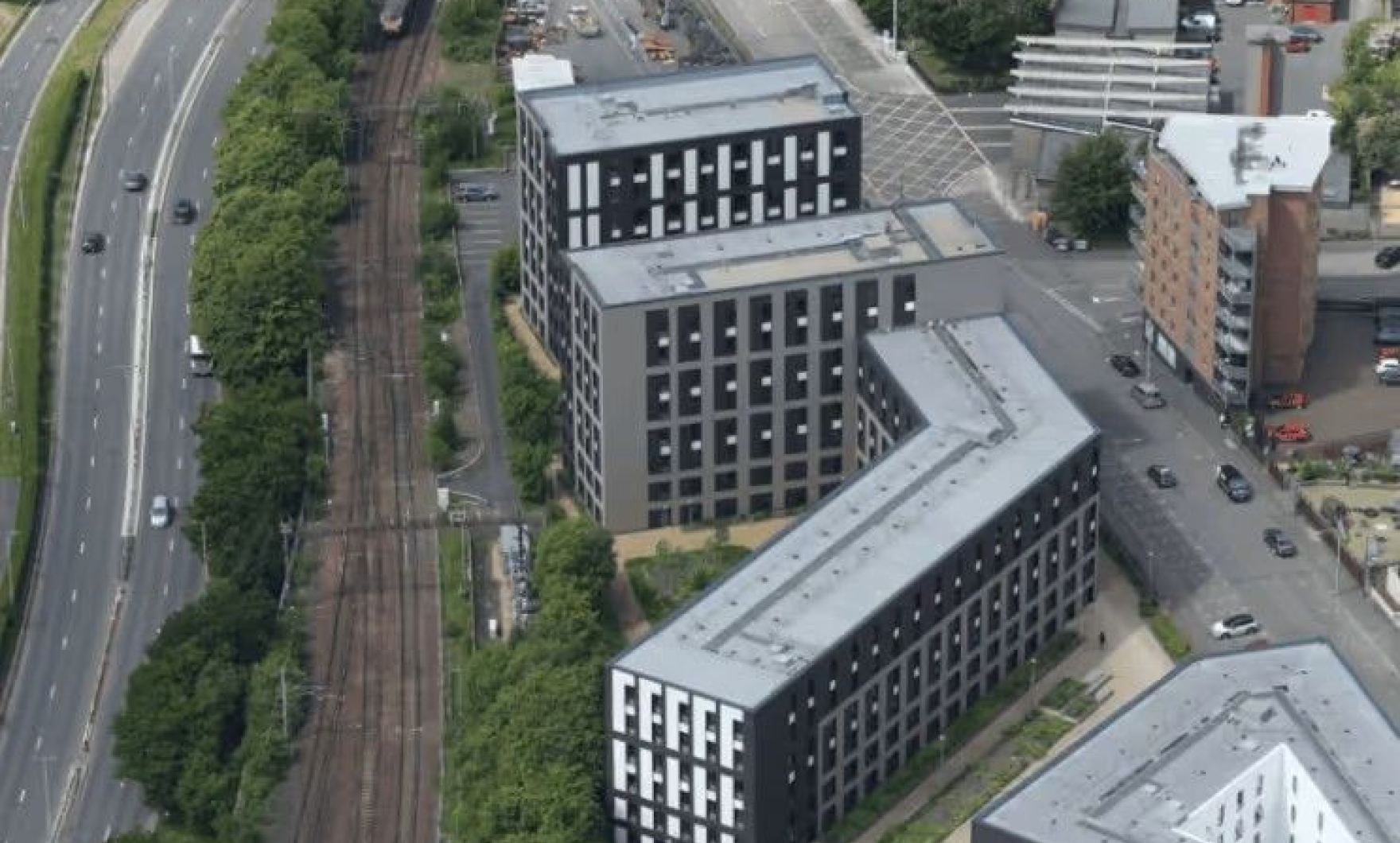
Richter supported Osprey Contracts Limited with temporary works designs to facilitate a major 10,000m² façade remediation project at Kelvinhaugh Street Student Accommodation in Glasgow.
The works required foundation designs for 24 mast climbers and the assessment of construction activities including telehandler movements and material storage.
The temporary works and construction methodology had to be developed so it did not impose destabilising additional loadings on the live Network Rail tunnel below.
The building remained fully occupied throughout the works, adding further constraints around construction phasing, disruption and maintaining the existing fire evacuation strategy.
The key engineering challenge was the limited information available regarding the construction, condition and structural capacity of the tunnel. With these uncertainties Richter was not able to derive a realistic capacity for the tunnel structure, and instead a load management strategy was developed focussing on the control of the construction loads imposed above it.
This required the construction operation to be considered holistically. The mast climber foundation reactions, telehandler movements and temporary material storage all had the potential to introduce additional or localised loading above the tunnel. Richter assessed these loads against existing accepted live loading assumptions, allowing the construction methodology to be developed so that, the temporary loads did not exceed the conditions already considered acceptable.
The challenge was not simply to manage loadings, but to do so whilst maintaining a workable construction methodology. Working closely with Osprey Contracts, the mast climber designer, the Contractor's Engineering Manager (CEM), the Contractor's Responsible Engineer (CRE-C) and Network Rail, Richter reviewed the methodology as the design progressed. Mast climber locations, telehandler routes and material storage areas were reviewed and, where necessary, moved or restricted to control loadings over the tunnel whilst the façade works progressed.
Richter also undertook the Contractor's Responsible Engineer – Design (CRE-D) role and developed the required Form C submissions in accordance with Network Rail requirements. Continued coordination between the project stakeholders allowed the temporary works and construction methodology to evolve together, addressing engineering constraints as they emerged and supporting the approval process required before the works could proceed.
Sustainability was also at the forefront of design works for the mast climbers. Reusable timber spreader foundations were used in place of larger stone working platforms, significantly reducing the volume of imported aggregate required and lowering the carbon footprint of the project
The resulting temporary works strategy enabled the façade remediation to progress whilst removing the uncertainties of loading the tunnel below. By considering the mast climber foundations alongside construction plant, material storage, sequencing and Network Rail requirements, Richter developed a solution around how the works needed to be delivered, balancing structural risk with constructability and the operational requirements of the project.