
Independent Category 3 Checking for Bridge Demolition and Replacement
Published: 24/11/2026 13:18
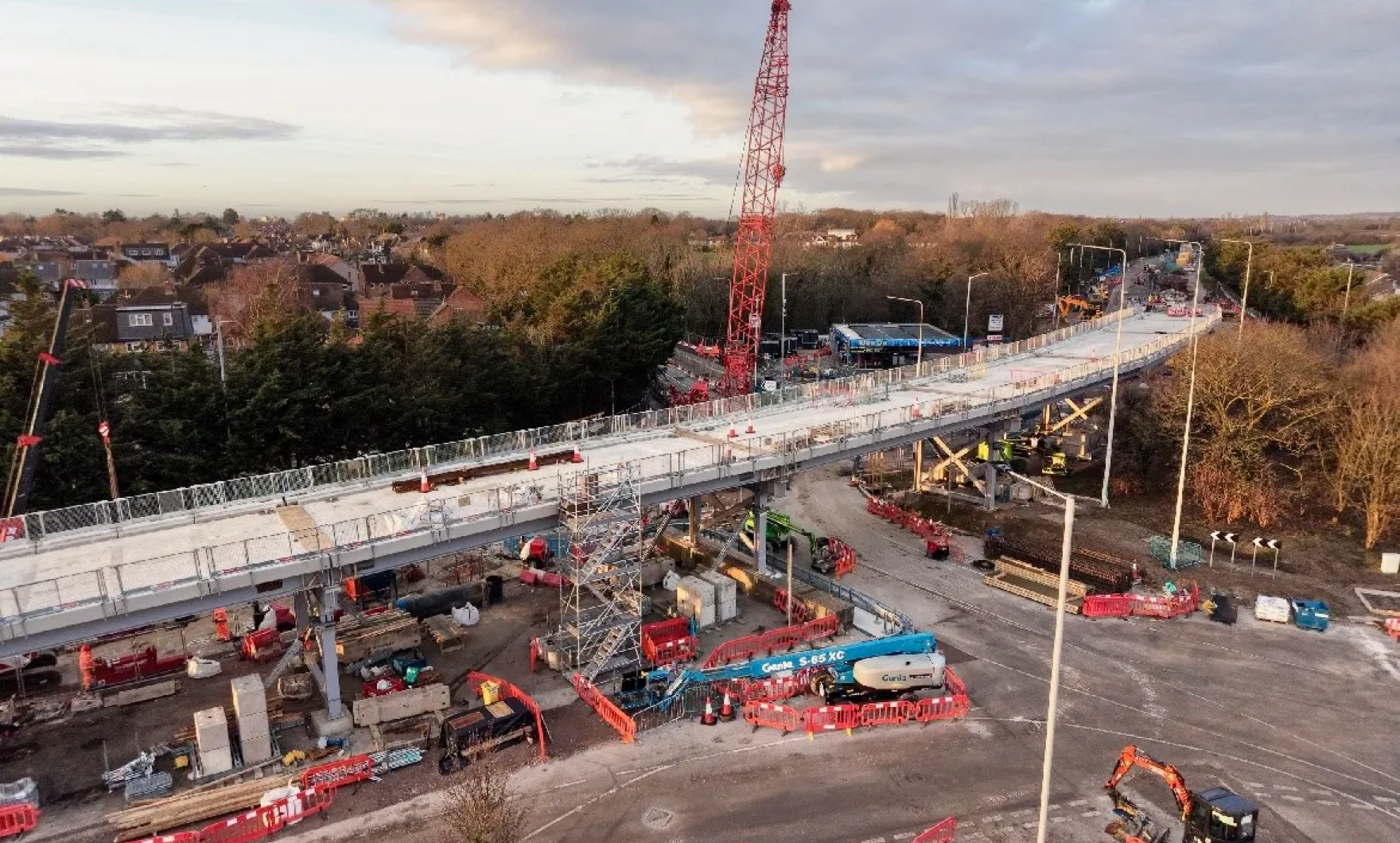
Richter supported Costain Ltd with independent Category 3 checking of temporary works associated with the demolition and replacement of the Gallows Corner Flyover in Romford, East London.
The existing structure was originally constructed as a temporary bridge in the 1970s but remained in service until 2025. Structural assessments and inspections identified significant deterioration in the structure, leading to the decision to replace it with a new permanent vehicular bridge.
The works entailed the safe removal of the redundant bridge and its replacement with a new structure. This required devising a safe demolition and construction sequence to enable the existing structure to be dismantled and the replacement bridge installed, with temporary works including crane platforms and propping. A critical consideration was maintaining structural stability as the existing bridge arrangement and load paths changed throughout the demolition sequence.
The existing bridge relied on steel springs to provide longitudinal restraint. Before the bridge decks could be lifted, these springs needed to be released, removing an element of the structure's existing restraint and changing how loads were transferred through the bridge. The stored energy within the springs also presented a hazard during their release, requiring a carefully controlled sequence.
Temporary propping between the bridge structure and supporting columns was introduced to provide stability following the removal of the springs. With demolition progressing from the centre of the bridge towards the abutments, Richter's independent check needed to consider how the bridge, existing columns, temporary props and foundations would behave as the structural arrangement changed.
Construction-stage finite element modelling was used to independently assess the proposed methodology. Rather than checking only the final temporary condition, the analysis reflected the sequence of demolition and the introduction of temporary propping at the relevant stages. This allowed the changing load paths and interaction between the existing structure and temporary works to be assessed throughout the operation.
The resulting forces were used to verify the supporting structural elements and temporary works, including checks for sliding and overturning stability. During this process, Richter identified that the initially proposed kentledge arrangement provided insufficient resistance. The kentledge was subsequently increased to achieve the required stability, with the revised arrangement confirming the viability of the proposed sequence.
The wider replacement project adopted Design for Manufacture and Assembly (DfMA) principles, with significant elements of the new bridge manufactured and assembled off-site before installation. The project's approach to carbon reduction was recognised with the Innovation in Carbon Reduction Award in Bridge Engineering at the 2026 New Civil Engineer Bridge Awards.
By independently assessing the temporary works alongside the proposed construction sequence, Richter's Category 3 check provided assurance that the changing structural behaviour of the bridge had been appropriately considered throughout demolition. The process also demonstrated the value of independent checking in identifying potential vulnerabilities and verifying that temporary works remain stable as structural conditions change during construction.
