
Temporary Works Design for the Preston Reach Flood Defence Scheme
Published: 01/10/2026 13:25
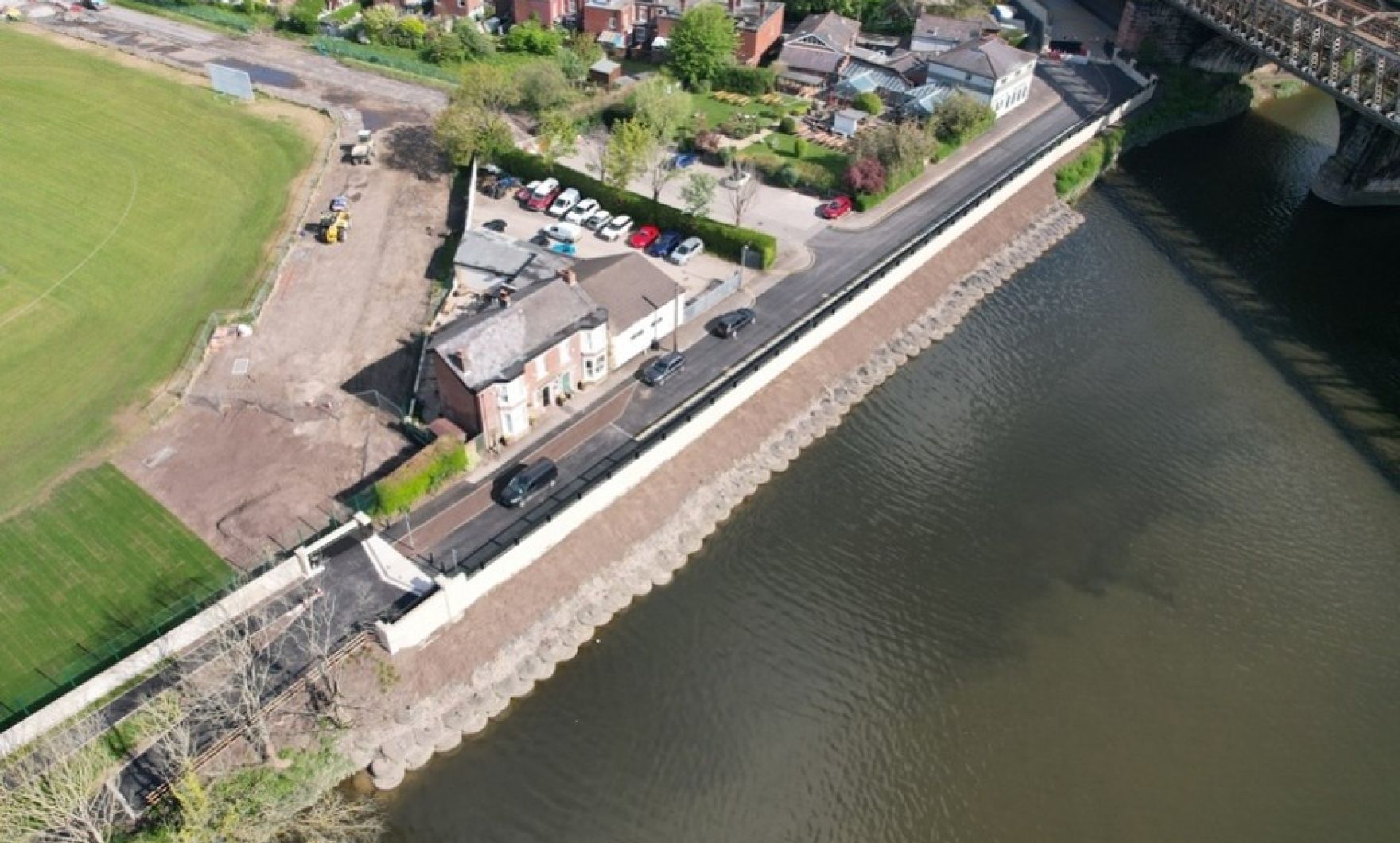
Richter supported VolkerStevin on critical sections of the £55 million Preston and South Ribble Flood Risk Management Scheme. The scheme was developed to reduce flood risk to more than 5,000 homes and businesses.
Richter's involvement included piling and working platform design, assessment of buried services beneath areas used by construction plant, sheet piling and riverbank slope stability. The works were also located close to the Ribble Rail Viaduct and the West Coast Main Line corridor.
Working adjacent to a live watercourse required the temporary works to be adaptable to variable ground conditions, changing retained heights and the potential effects of river flows. Using all the information available Richter developed a comprehensive ground model to allow designs to be developed using informed information. This was used to undertake informed designs for the working platforms, sheet piling and slope stability assessments. from the outset.
As construction progressed, it became apparent that actual site conditions differed from those anticipated during design. During installation some sheet piles reached refusal above their intended toe level at several locations along the alignment. Using the ground model Richter was able to review each affected location, review the actual retained height and ground conditions at those points and confirm the installation was acceptable or required further intervention.
A separate challenge emerged where significant movement of a section of sheet pile wall was identified, this was due to localised poor ground conditions. With an exclusion zone established on site, Richter undertook an urgent investigation into the cause of the movement and developed a stabilisation solution.
Using HDPE aquabags already on site, Richter designed a series of rock bags (using site won materials) to provide additional weight on the lower side of the sheet pile wall. This additional weight would prevent the piles from moving any further. The calculations for these needed to be done using ‘first principals’ considering earth pressures, sliding, overturning and river flows.
To provide further assurance that the remediation designs were working Richter specified monitoring. Daily movement readings and visual inspections of the slope provided ongoing verification of the success of the stabilisation measures and provided Richter with ongoing information on the behaviour of the site.
The close proximity of the works to the Ribble Rail Viaduct and West Coast Main Line meant the project needed to follow Network Rail approval process. Richter developed the Network Rail Form C submission for the temporary works designs covering piling platforms, crane positions, excavation and slope stability. The package was developed within an accelerated programme to provide the assurance required for works to proceed without introducing unacceptable risks to an operational railway.
Through close collaboration with VolkerStevin, Network Rail and the Environment Agency, Richter provided practical temporary works solutions and was able to respond to changing site conditions and hence mitigating against possible delays. This highly successful project demonstrated how combining design, site feedback and ongoing monitoring allows a designer to fully understand a site and allow temporary works to be adapted quickly as construction progresses.
