Temporary Works Design and Construction Sequencing in a Live Highway Environment
Published: 17/03/2026 13:38
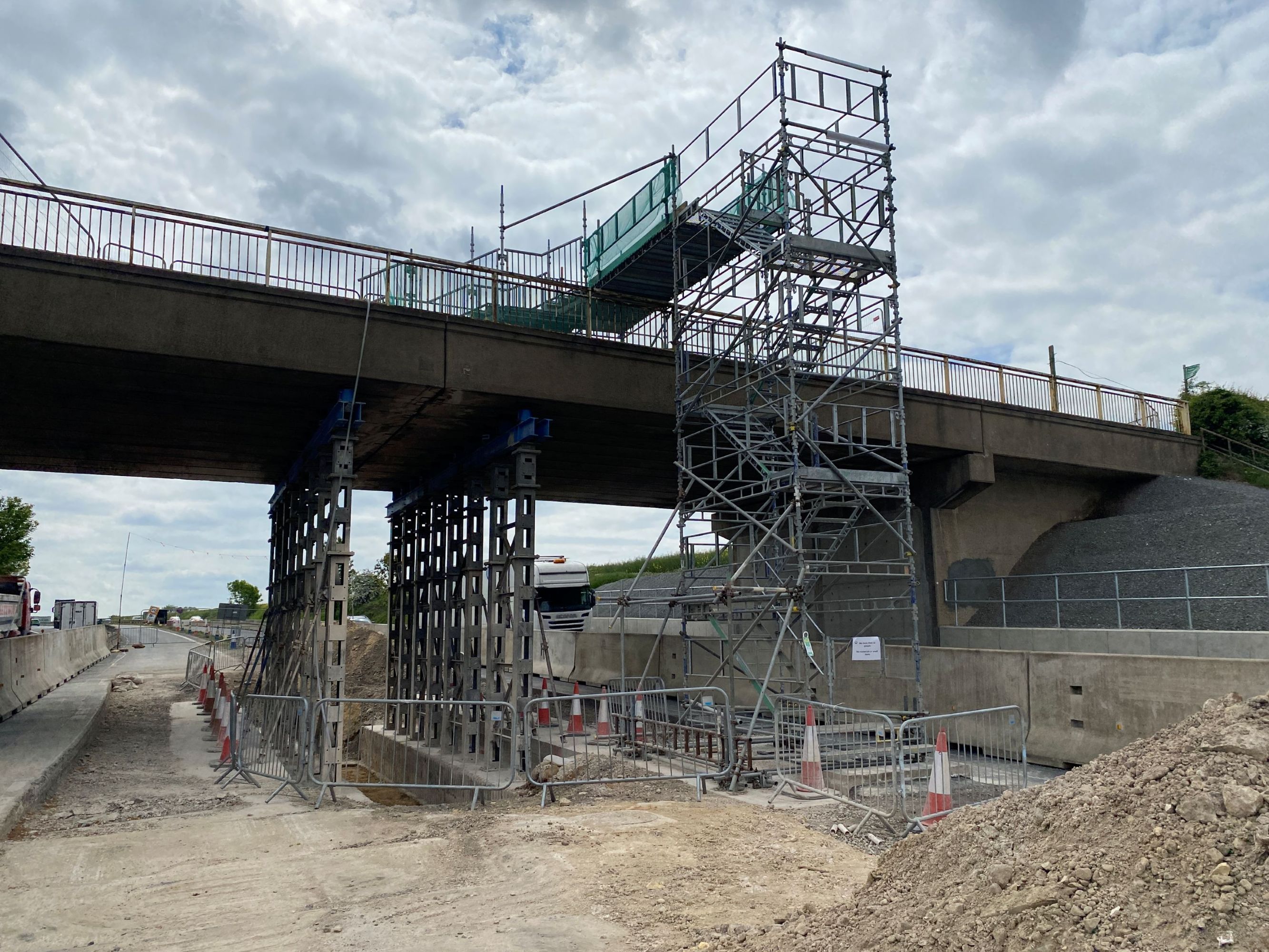
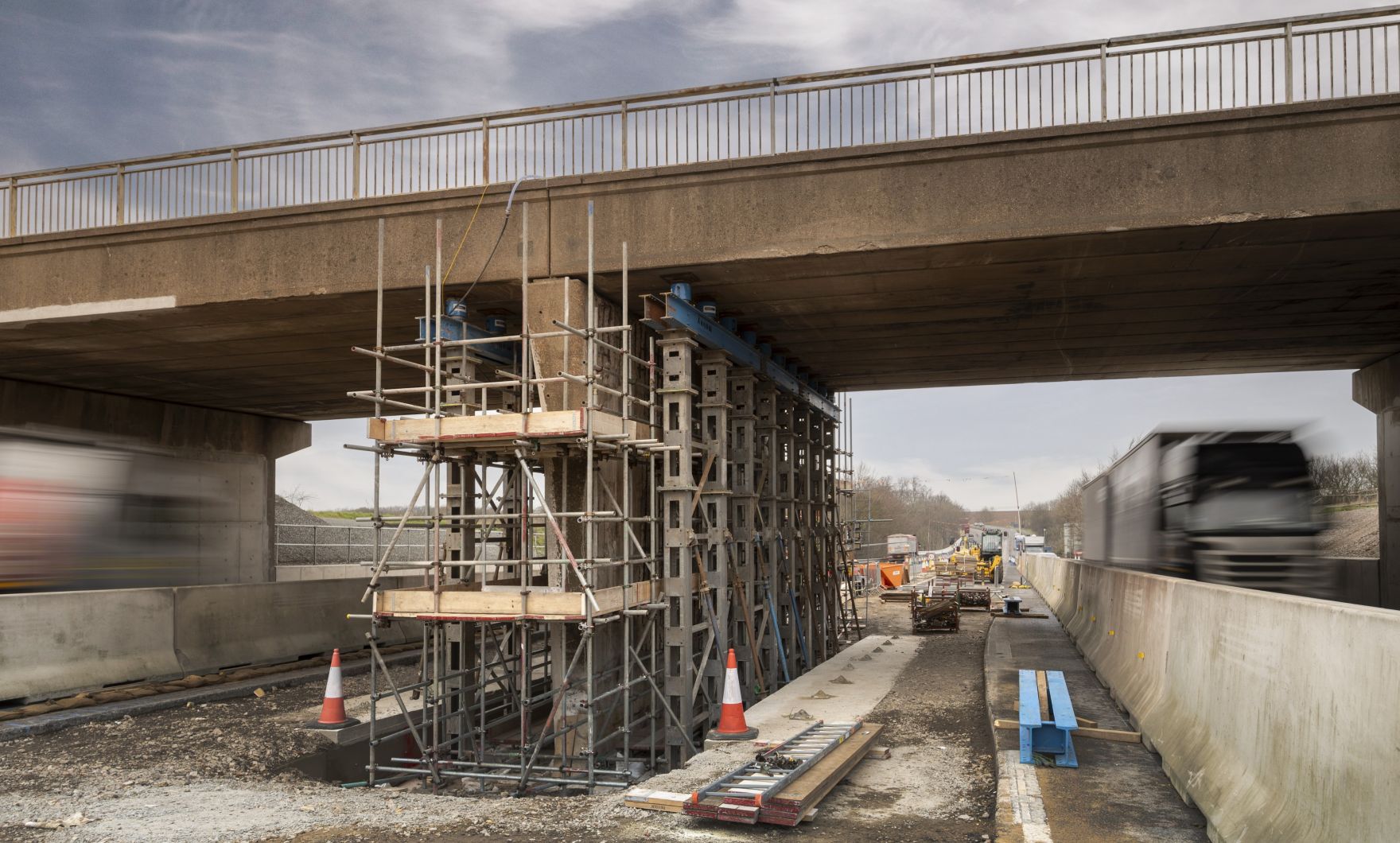
Richter supported Octavius in delivering essential maintenance works to Wentedge Road Bridge, including the demolition and replacement of a central pier, bearing replacement, and concrete repairs. Set between live A1 carriageways, the works were carried out within a tightly constrained footprint, with traffic maintained throughout.
Working within a live highway environment introduced significant constraints and increased risk. The bridge required continuous support while the existing pier was demolished and rebuilt, all in close proximity to traffic and within a restricted working area. The challenge lay not just in supporting the structure, but in controlling how loads would behave as the pier was progressively removed—without compromising the temporary works or the operational carriageway below.
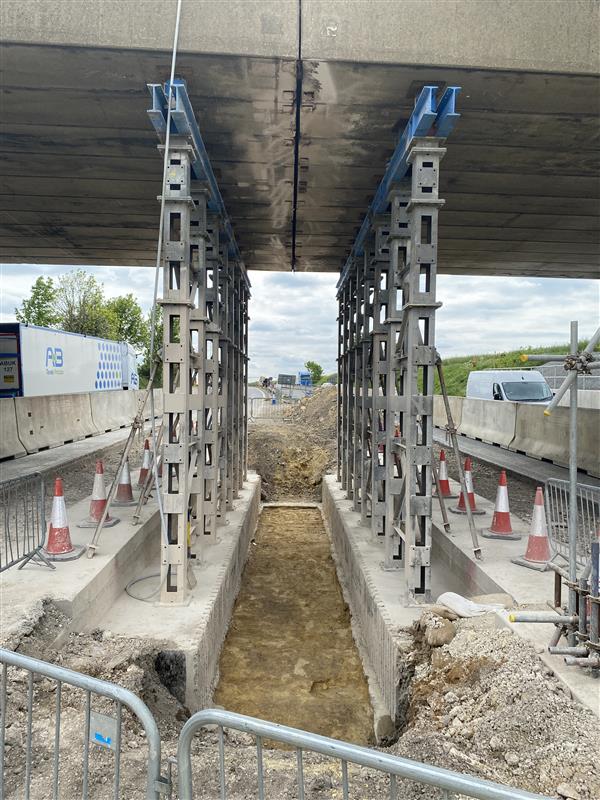
Richter developed an integrated temporary works solution that combined structural design with construction sequencing. The propping system was designed to perform under variable conditions, accommodating construction stage loading, demolition-induced load redistribution, and potential accidental loading from adjacent traffic.
Close coordination with the contractor informed the demolition methodology from an early stage. The pier was divided into manageable sections and removed using a scaffold-based lifting arrangement, allowing the sequence to be tightly controlled. This cut-and-lift approach reduced the risk of unintended load transfer and enabled demolition to progress safely within the constraints of the site.
Alongside the primary propping design, a suite of temporary works was developed to support delivery, including excavation support adjacent to the carriageway, formwork for new footings and pier construction, and access systems. Each element was considered in the context of the overall sequence, with stability maintained at critical stages throughout.
All temporary works were developed within a 3D environment, enabling coordination across the scheme and providing clarity on how the works would be delivered. The use of 3D modelling and animation allowed the sequence to be visualised in advance, reducing uncertainty and supporting safe execution on site.
Within the constrained environment, maintaining stability at every stage remained critical. A guide clamping detail was developed to provide lateral stability to the sliding formwork, enabling safe installation while maintaining alignment during construction.
The temporary propping solution utilised a modular proprietary system, reducing the need for bespoke fabrication and enabling efficient installation within the restricted footprint. Designs were optimised to minimise material use while maintaining the required safety and performance standards.
The works were delivered with the bridge supported at all times and the A1 remaining fully operational. Richter’s solution enabled a complex sequence of works to be executed safely within a live highway, demonstrating the value of collaboration during the design development stages.